Philosophy in Action | The Conductor as Storyteller
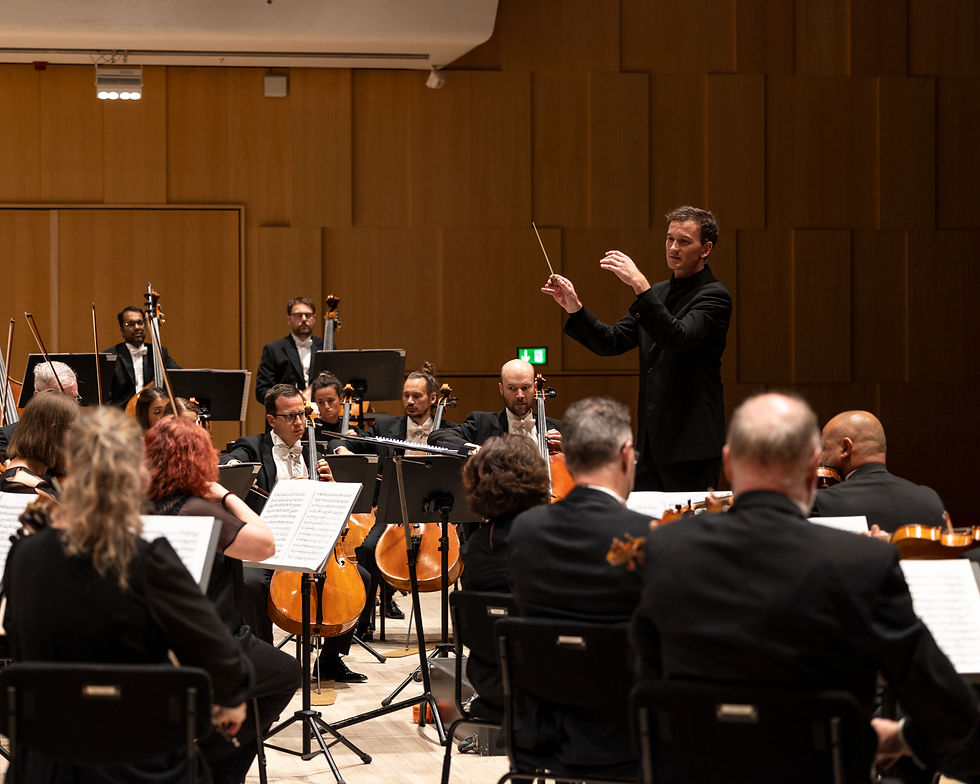
"For me, conducting is not about keeping time or simply interpreting a score – it is an act of storytelling. Every gesture becomes a bridge between the traditions of the past and the immediacy of the present."
At the heart of Jarl Eivind Aspen's artistry lies the vision of the Conductor as Storyteller. Through this philosophy, Aspen seeks to reanimate the archive, breathing new life into the score and transforming performances into visceral, real-time experiences for both orchestra and audience. This philosophy is built upon three core pillars:
intertwining
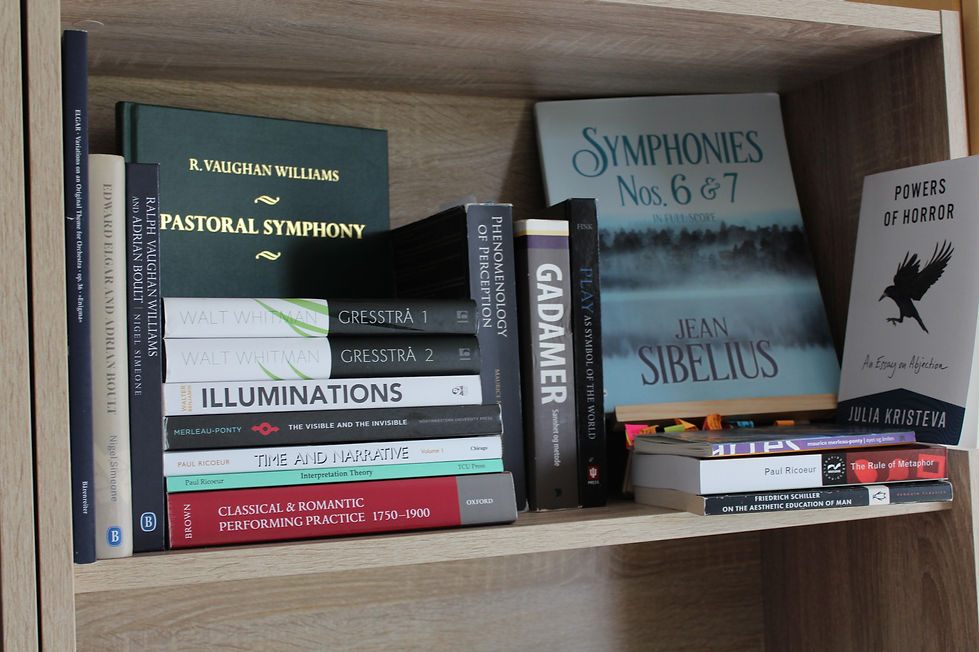
Merleau-Ponty & Embodied Leadership
The conductor’s body acts as the medium for musical life, where Aspen uses expressive, intentional gestures to turn the podium into a space of kinetic storytelling. Drawing on Merleau-Ponty’s philosophy, he transcends mere notation to communicate the music’s deepest essence.
Sonic Result: Orchestras transform dynamically into an extension of gesture, creating highly immediate, deeply alive, and emotionally charged symphonic performances.
The Living Archive
Gadamer & Hermeneutic Dialogue
Aspen approaches historical recordings and notes as a "living archive," using Gadamer’s hermeneutics to engage in a creative dialogue with the past. By treating expressive timing anomalies as tools, Aspen bridges historical memory with modern artistry, reimagining late-Romantic traditions.
Sonic Result: Artistry creates a deep, resonant temporal dialogue, allowing forgotten historical practices to speak directly, boldly, and vividly to modern listeners.
The Play-World
Eugen Fink & The Freedom of Music
Aspen views music as a transformative "play-world," drawing on Eugen Fink’s theory of play. The approach emphasizes interpretive freedom and spontaneous interaction, encouraging orchestras to move beyond rigid precision for a more thrilling experience.
Sonic Result: A deeply co-creative environment that actively invites the entire orchestra and audience into a truly dynamic, unpredictable exploration of boundless sound.
Why This Philosophy Matters
In an age where precision often overshadows poetry, Aspen’s philosophy reclaims storytelling as the heart of orchestral performance. At its core lies a threefold foundation – Memory, Perception, and Fantasy – which intertwine to bridge the past, present, and future, transforming music into a dynamic and timeless art form:
-
Memory (The Past): Anchors the performance in historical context, inspired by Gadamer’s hermeneutics. Through the living archive, Aspen honors expressive traditions while actively reimagining them for a contemporary audience.
-
Perception (The Present): sharpens the awareness of the immediate moment, reflecting Merleau-Ponty’s philosophy of embodiment. Aspen’s intertwined presence transforms each performance into a visceral, real-time act of discovery.
-
Fantasy (The Future): propels the performance forward, drawing from Fink’s concept of play. Aspen’s playful approach invites orchestras and audiences into imaginative, transformative, and unpredictable musical landscapes.
"This philosophy matters because it reminds us that music is not merely sound – it is a bridge between what was, what is, and what could be. It celebrates the humanity of performance: the collaboration, risk, and spontaneity that make live music an irreplaceable art form."
Together, Aspen’s approach invites musicians and audiences alike to step into the enigmatic space of the concert hall, where time folds in on itself and the stories of the past are reborn to illuminate the future.


